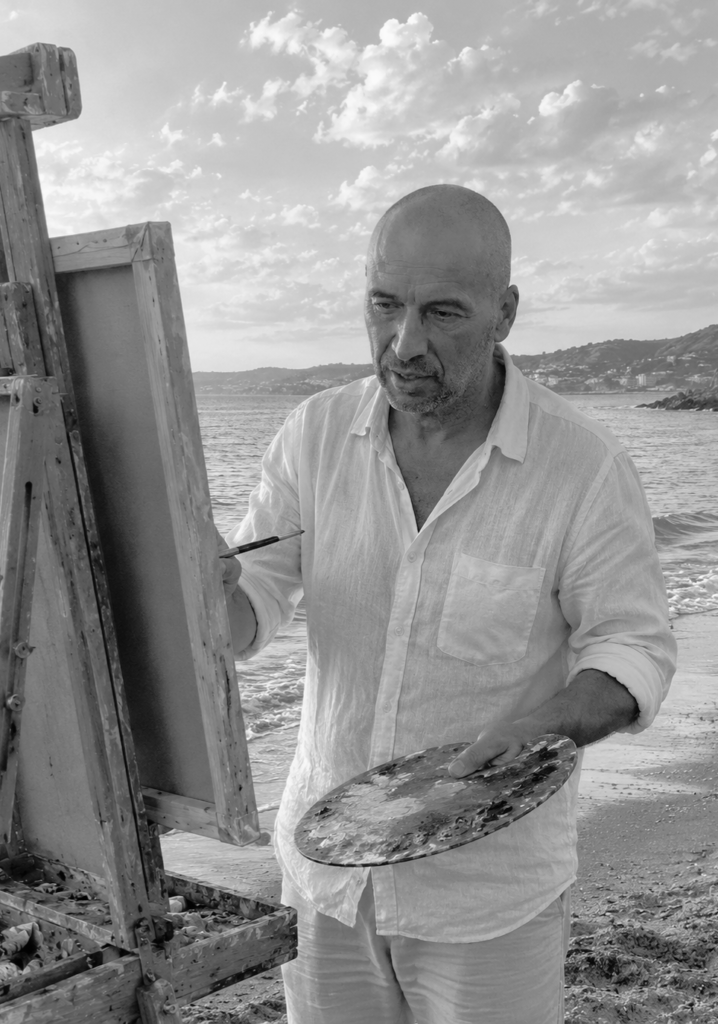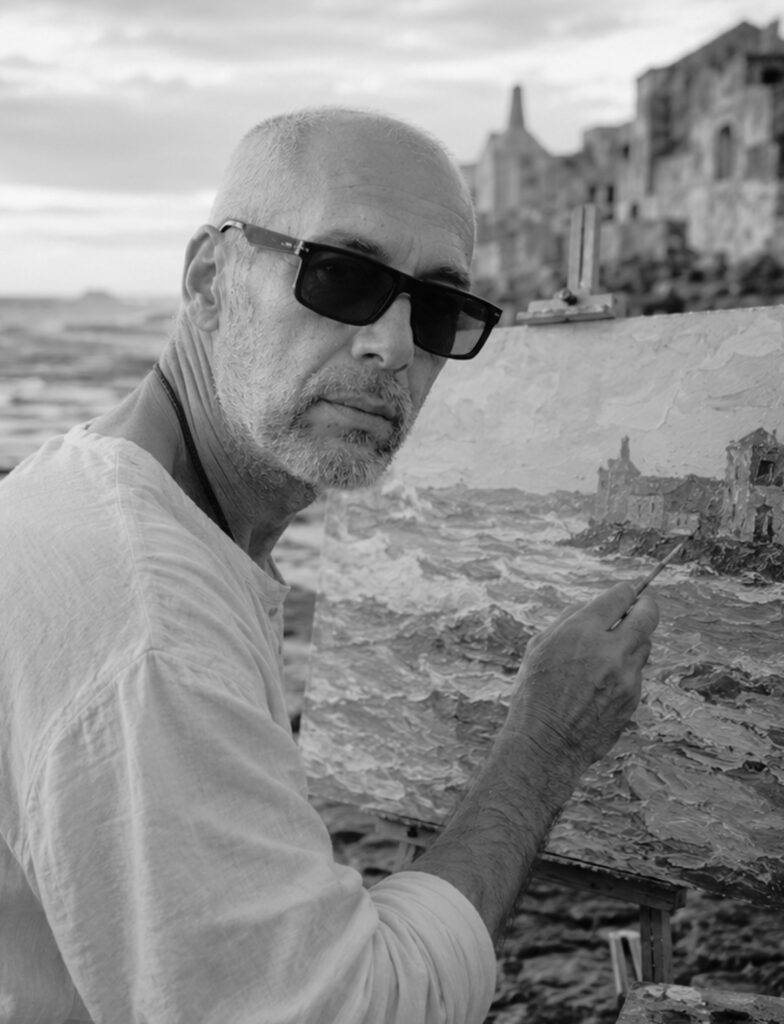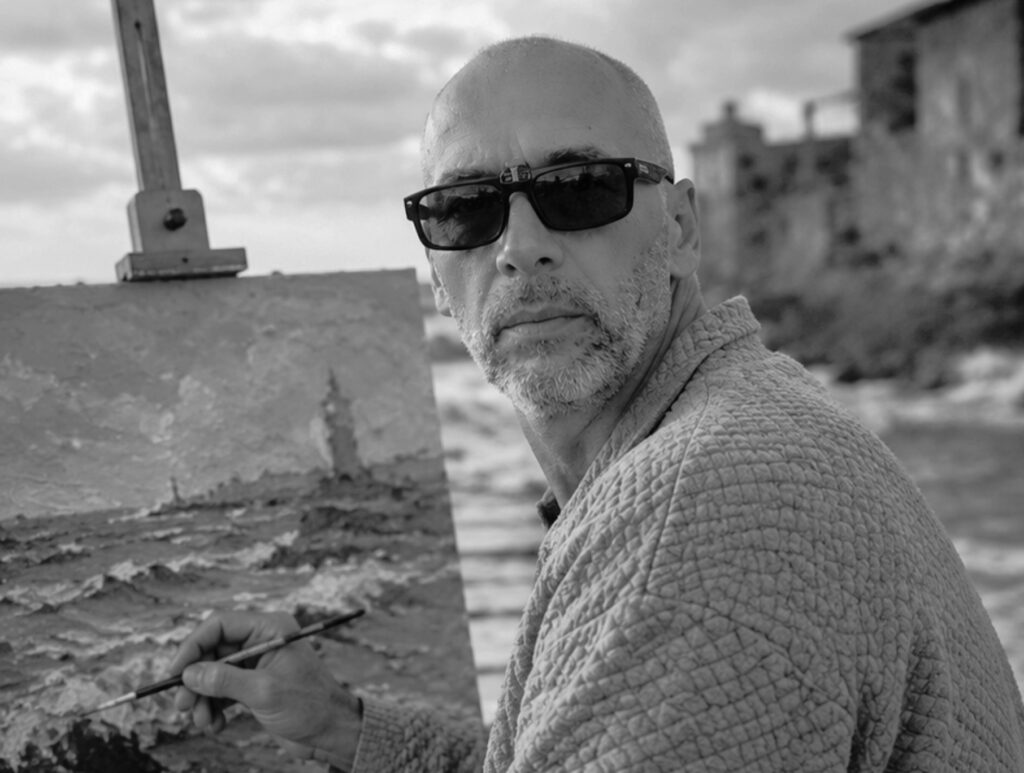
Balazs Varkonyi-Vidakovich
ARTIST STATEMENT
Balazs Varkonyi-Vidakovich is a contemporary Hungarian painter whose recent works emerge from the fragile borderlands between silence, memory, human loss and the eternal presence of the Atlantic Ocean.Behind his paintings once stood exhibitions, collectors, professional recognition and the distant echoes of international success. His works entered private collections across Europe and the United States, while art historians and professional juries recognized the emotional depth and painterly force of his visual language. Then, after a personal tragedy, the artist fell silent.
Not for months.
Not for years.
For almost twelve years.
The brushes became still. The canvases remained empty.
Painting slowly dissolved into an inner silence where memory itself became difficult to approach.What finally brought him back was not the memory of exhibitions, nor the world of galleries or artistic recognition.
Then came the Kristin storm.It did not only destroy houses, roads and forests along the Atlantic coast.It shattered the fragile illusion of permanence itself. For days, the ocean became an overwhelming presence — louder than human voices, stronger than memory, stronger than silence. While everything around him seemed broken or erased, one thing remained unchanged: the Atlantic Ocean. Its endless movement, its indifference, its ancient force.
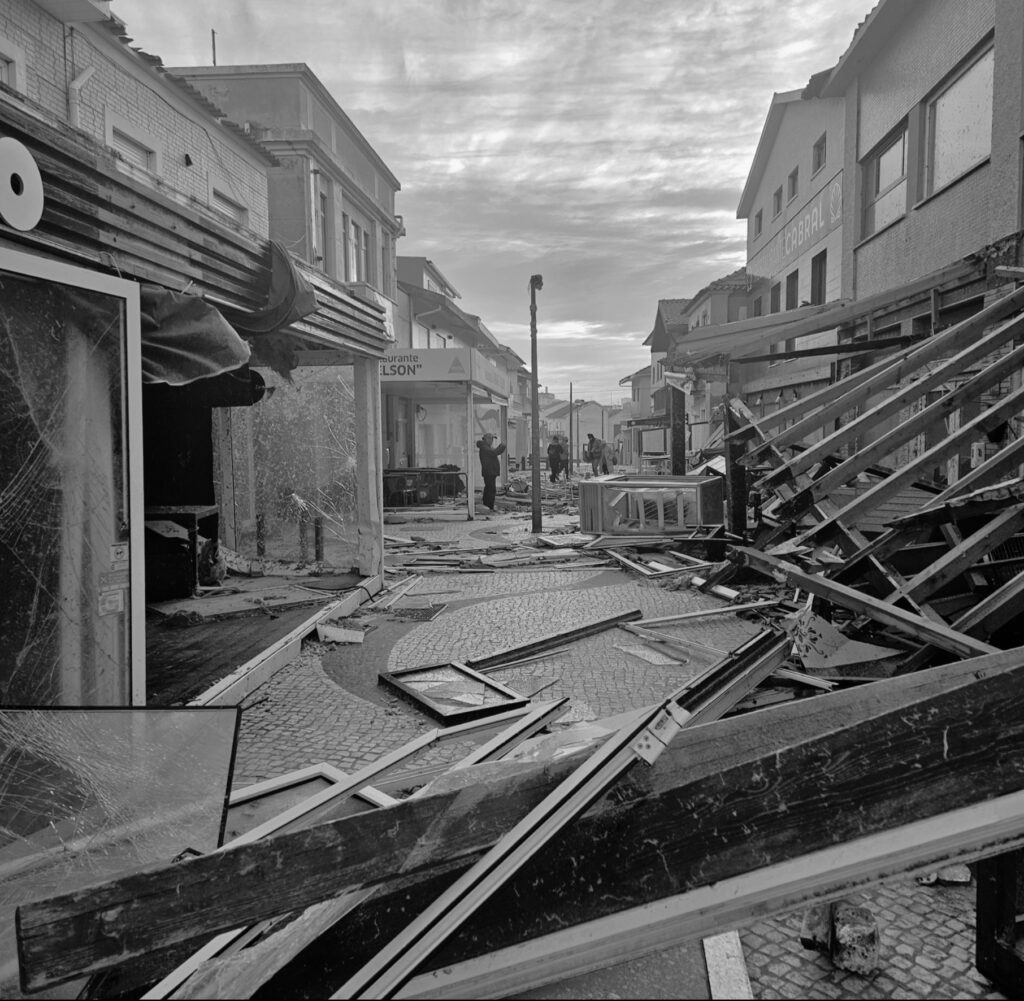
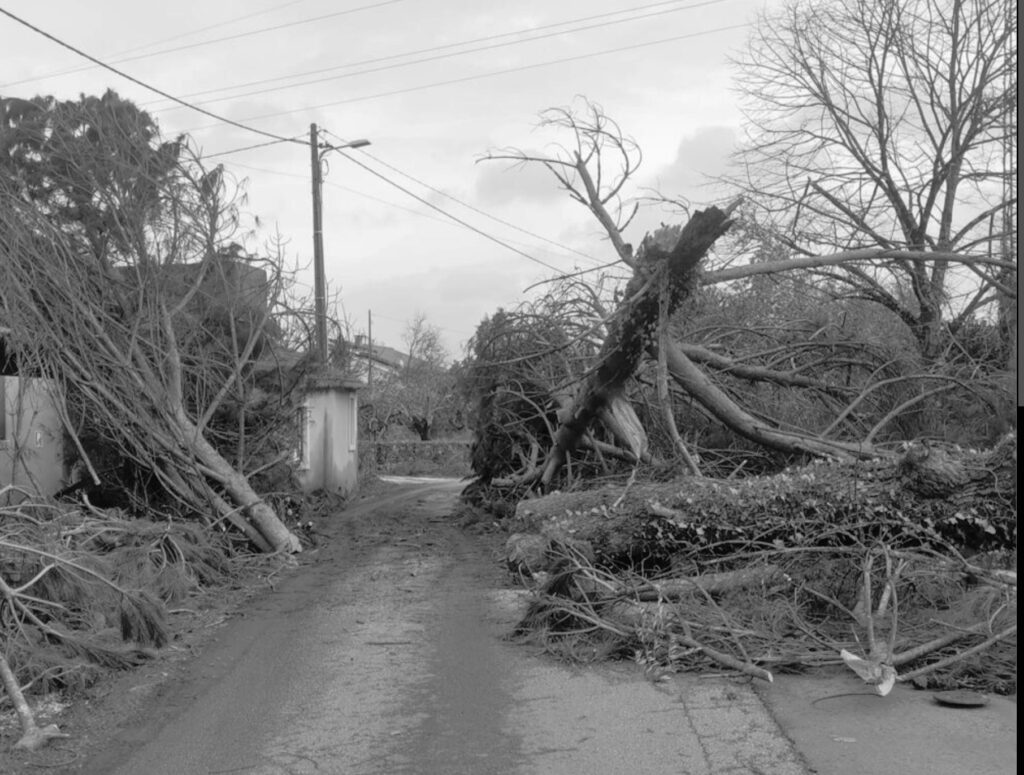
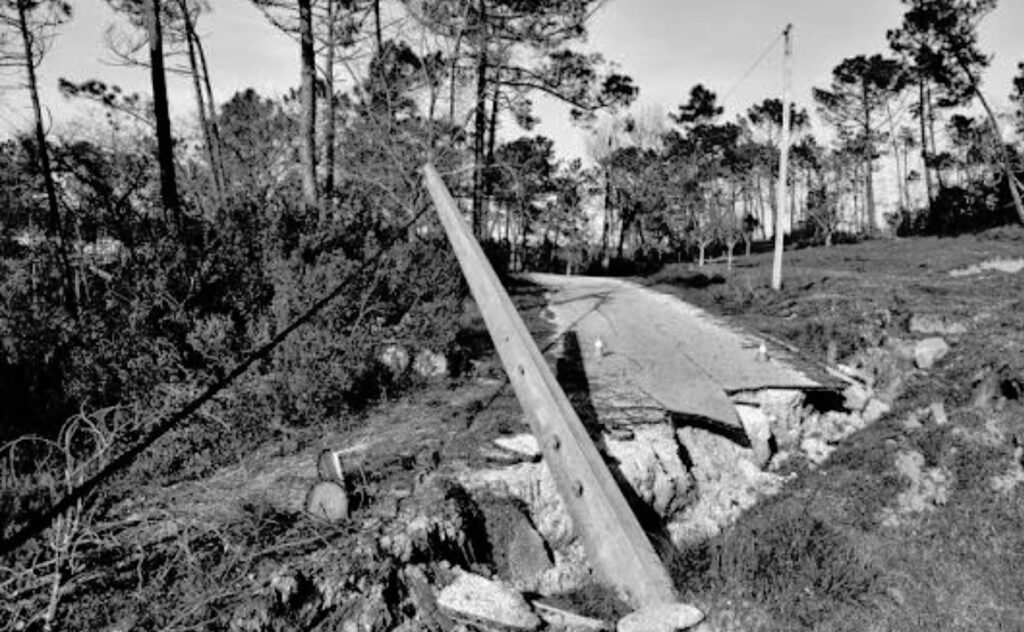
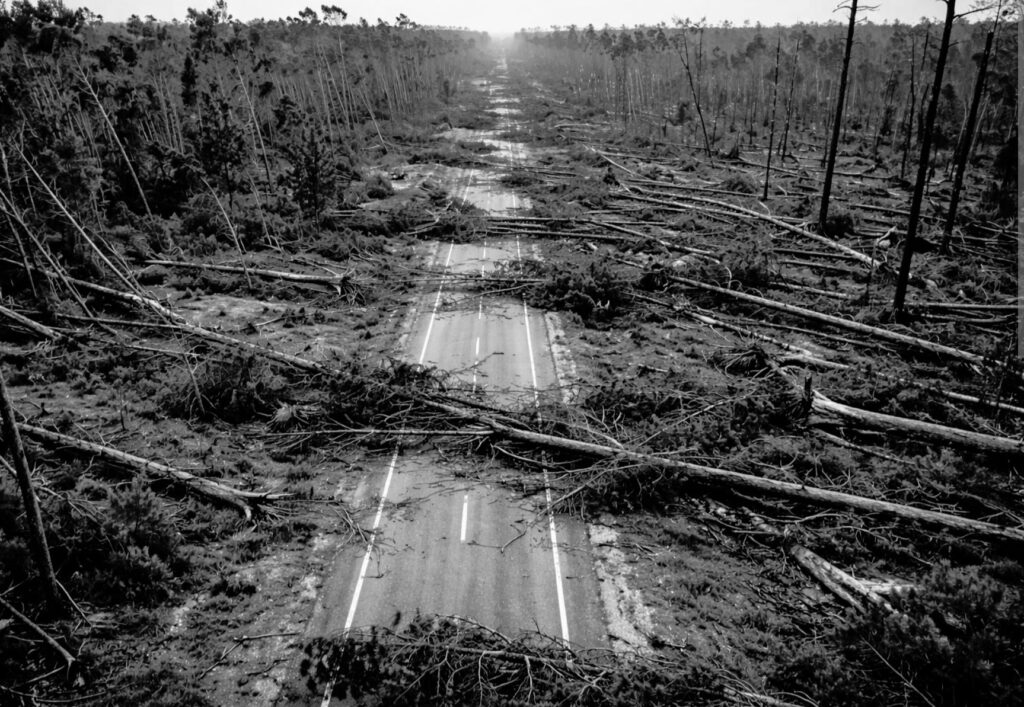
As Praia da Vieira slowly began rebuilding from ruins and debris, something also began rebuilding inside the artist.
Not through intention.
Not through ambition.
But through the silent necessity to create again. From destruction came the return of painting.
The Atlantic Period was born from this confrontation between loss, memory, nature and survival.
The disappearing houses of Praia da Vieira, the wounded coastline after the storms, the abandoned fishing structures, the silence left behind by the sea, and the fragile human stories hidden inside these landscapes opened an entirely new chapter in his work.From this encounter emerged the Atlantic Period. These paintings no longer seek to preserve landscapes alone. They attempt to preserve emotional memory itself — the invisible tension between human fragility and the permanence of nature. The ocean remains.Human lives disappear. Villages vanish. Boats decay. Generations fade into silence.But the Atlantic continues to watch unchanged.Again and again, children appear inside these works — not as decorative figures, but as bridges between past and present. Through them, memory survives. Through them, forgotten worlds continue to breathe for one more moment.
The Atlantic Period is therefore not simply a series of maritime paintings. It is a visual archive of disappearance, survival, silence and return.These works stand somewhere between painting, memory and testimony.
The ocean does not remember us. But perhaps painting still can.